In the 1970s, Loïc Le Ribault developed a revolutionary method for analyzing sand, called exoscopy. The method makes it possible to trace the geological history and the origin of sands by examining them under the scanning electron microscope (SEM).
At only twenty-four he presented his first paper on the subject to the Academy of Sciences, followed by many others.
Between 1973 and 1981, Le Ribault worked as a contract researcher at the oceanography laboratory of the University of Orsay. He then headed the electron microscopy department at Total’s central laboratory in Bordeaux until 1981. From 1975 he was recognized as “the researcher who discovered the most important applications of the electron microscope in sedimentology”.
Today exoscopy is used throughout the world, in sedimentology as well as in mining geology, oil exploration, archaeology, oceanography, civil engineering and forensic science.
“You need only contemplate a simple grain of sand, and you will see in it all the wonders of Creation.”
Paulo Coelho, The Alchemist
A walk on a grain of sand
What you need to know before the journey
The micron
The micron, also called the micrometer or µm, is one thousandth of a millimeter. It is a very different scale from the kilometers motorists cover on the motorway: one kilometer is a billion microns.
In this section some photographs carry a scale bar in µm, while others show only the magnification. At a magnification of 1,000 times, one centimeter on the photograph represents 10 µm; at 10,000 times it represents only 1 µm.
The scanning electron microscope
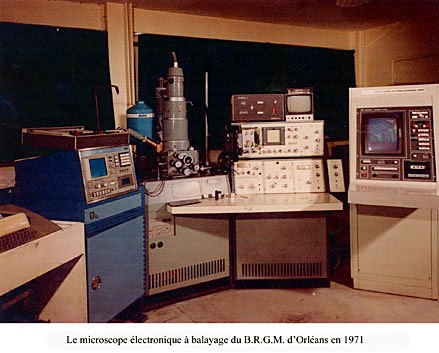
The vehicle for this journey is the scanning electron microscope. Since it came into use in the 1960s it has improved considerably. In 1970 it allowed progressive magnifications from 10 to 20,000 times; by 2004 it could reach 900,000 times.
At 20,000 times, the diameter of a one-millimeter grain of sand represents twenty meters: a surface of one square kilometer to explore.
The SEM works as follows: a finely focused beam of electrons, deflected through electromagnetic lenses, sweeps rapidly across the surface of the sample. When the primary electrons strike the sample, it emits secondary electrons which, through a photoelectric effect, build a luminous image on a screen or a photographic plate.
By exploiting the emissions from the surface of samples, the SEM not only restores the morphological image of the sample but also provides an elementary chemical analysis, thanks to the energy-dispersive spectrometers that can be coupled to it.
Sand
In everyday language, sand is a loose material made up mainly of quartz grains, the grains of sand. Most of them measure between 1/16 of a millimeter and 2 millimeters across.
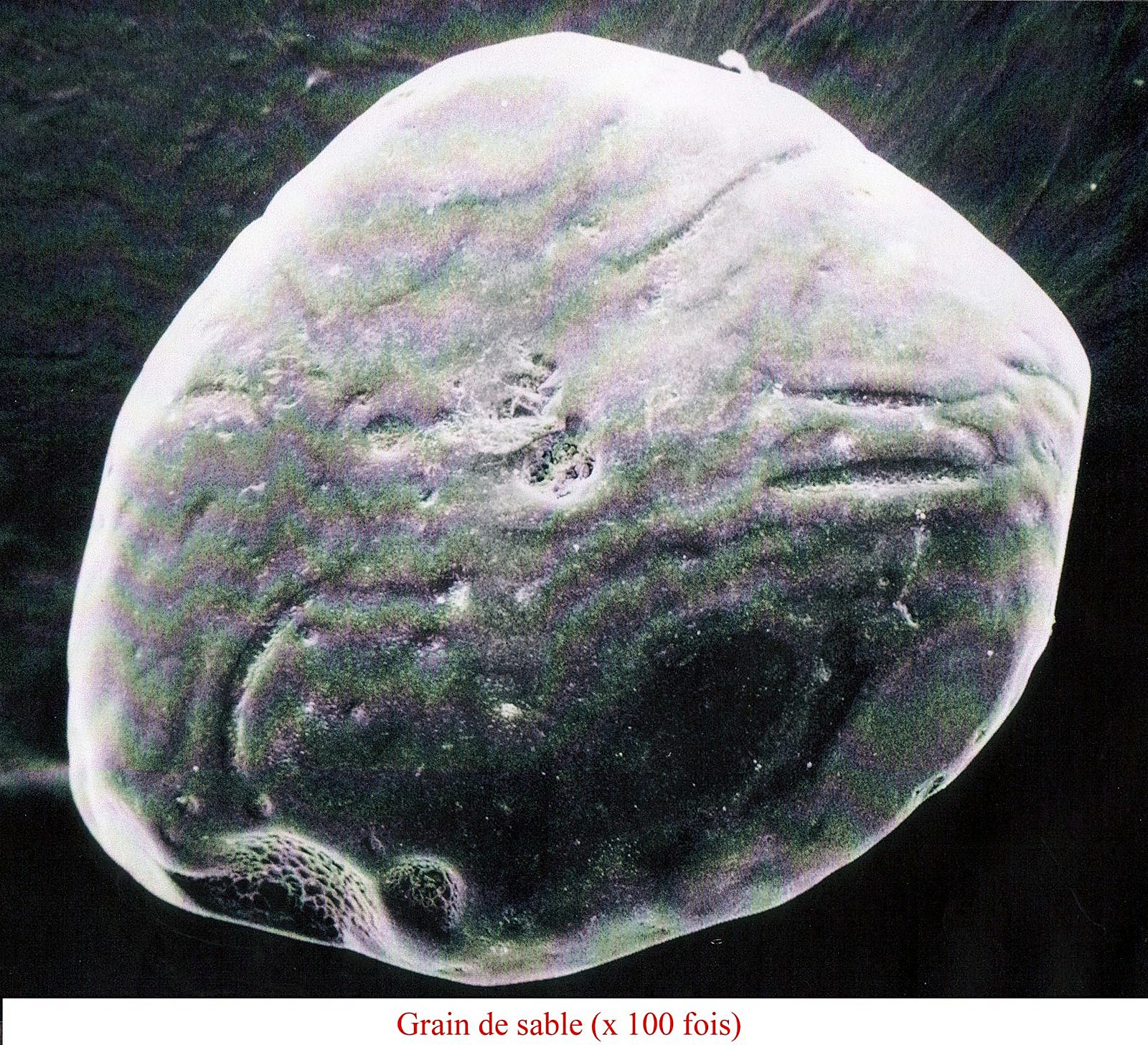
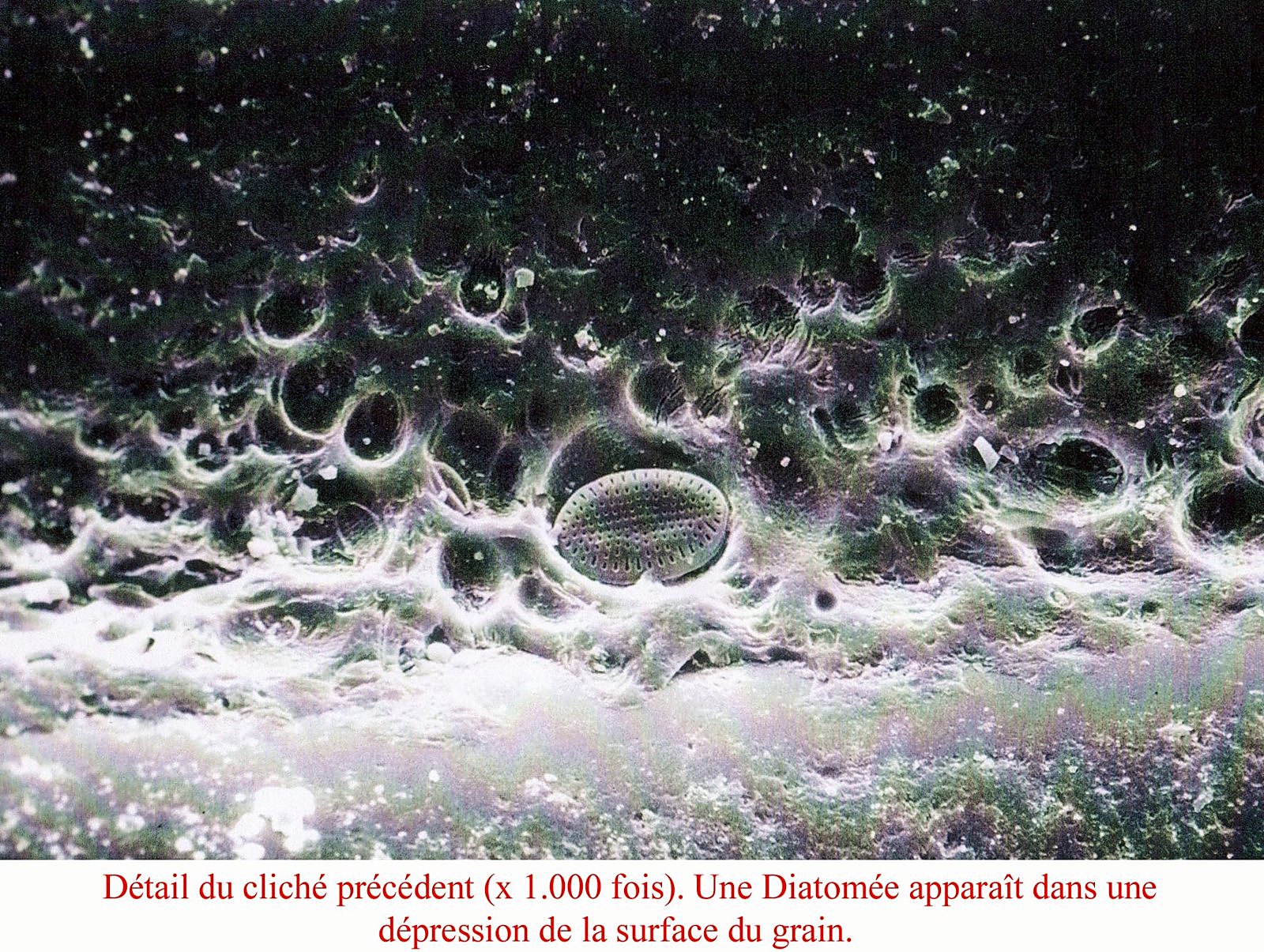
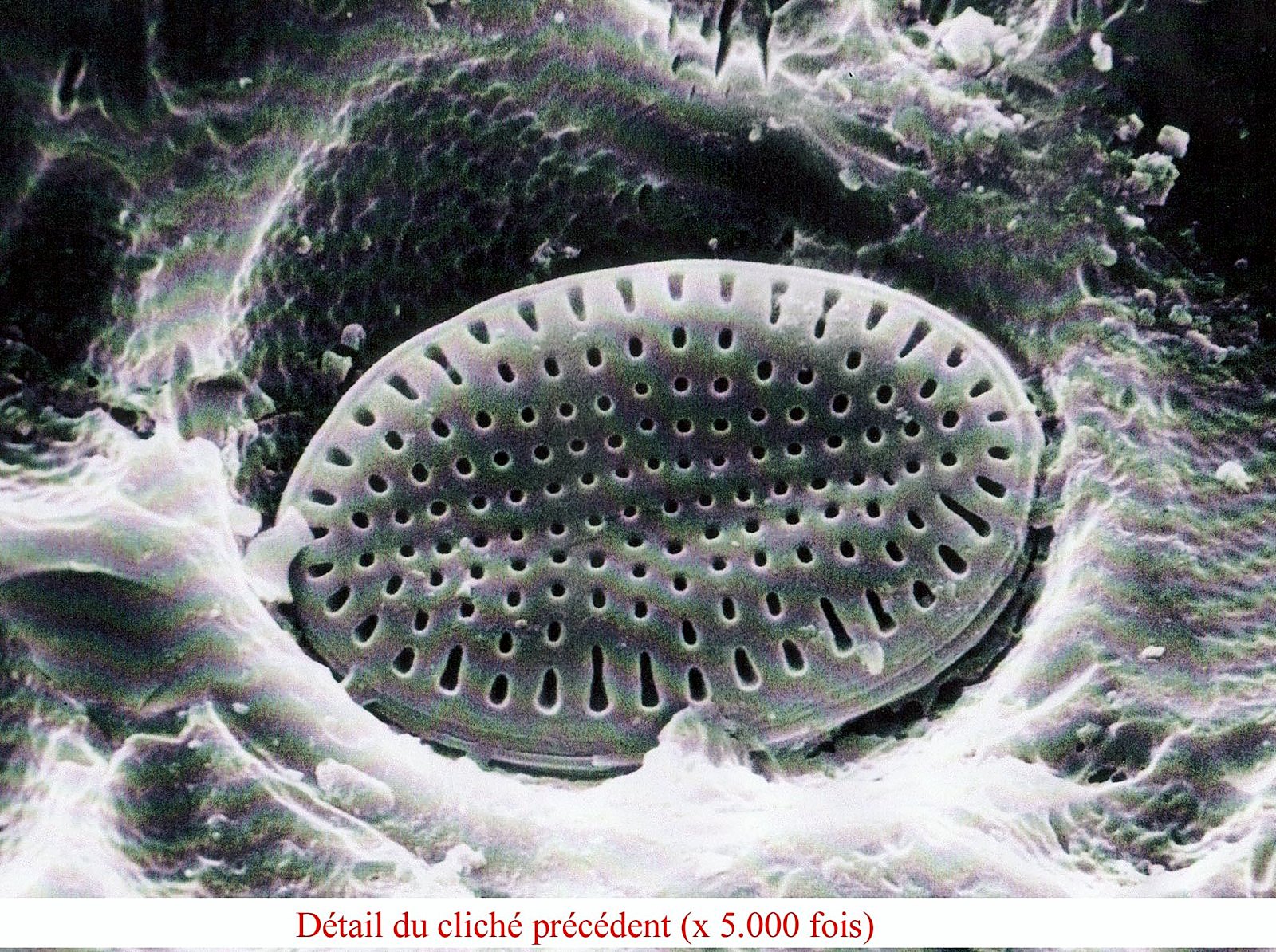
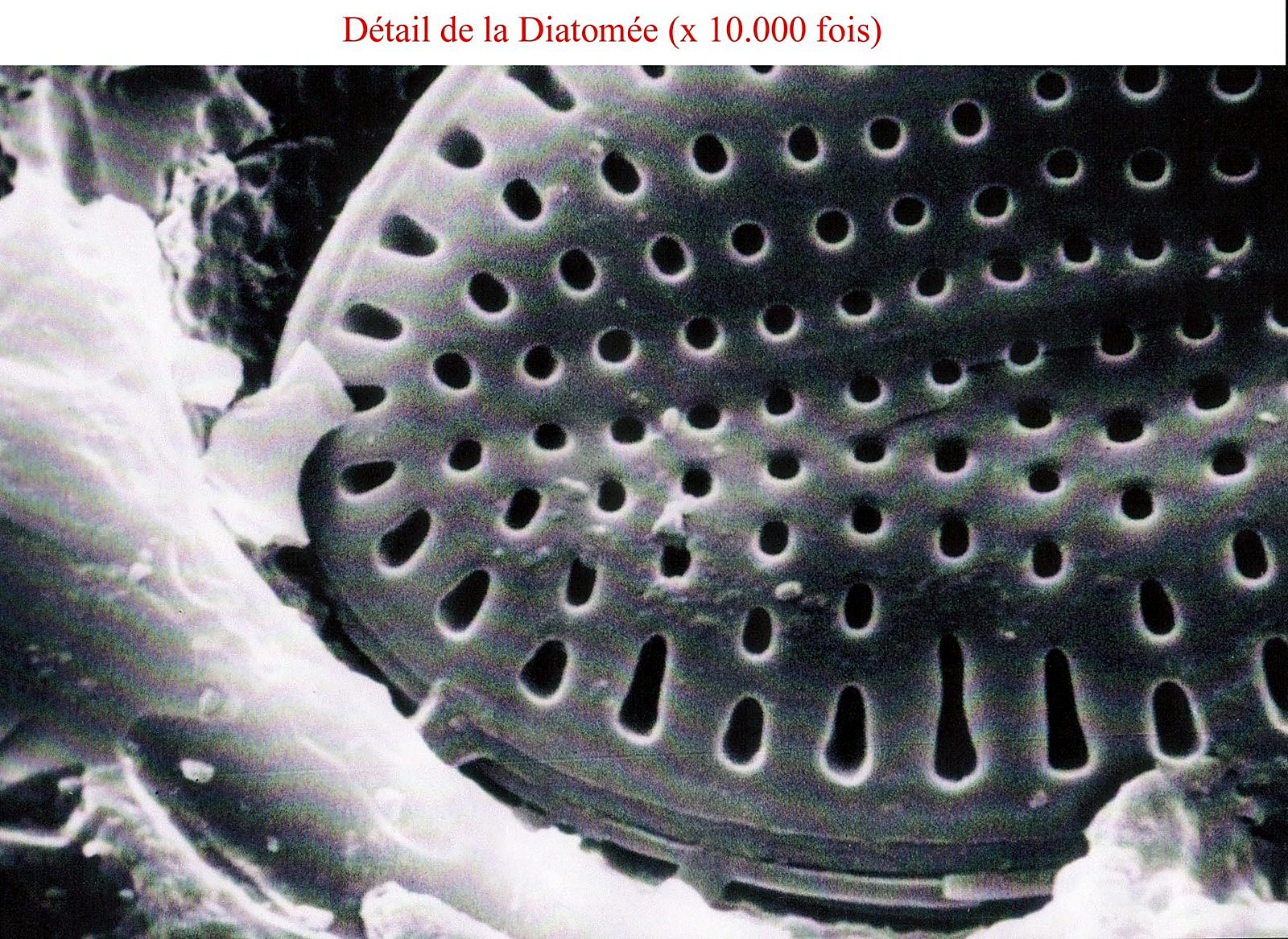
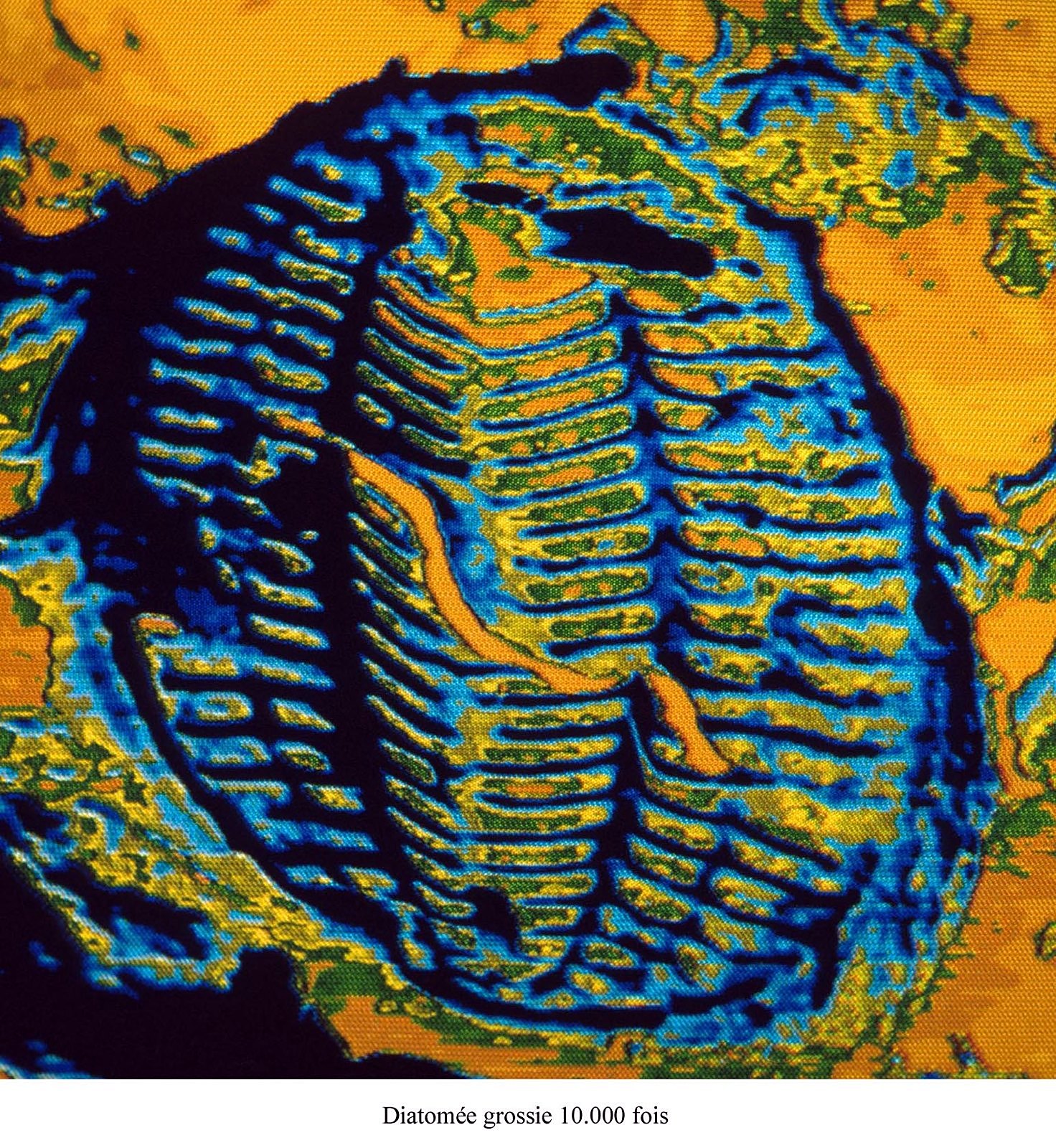
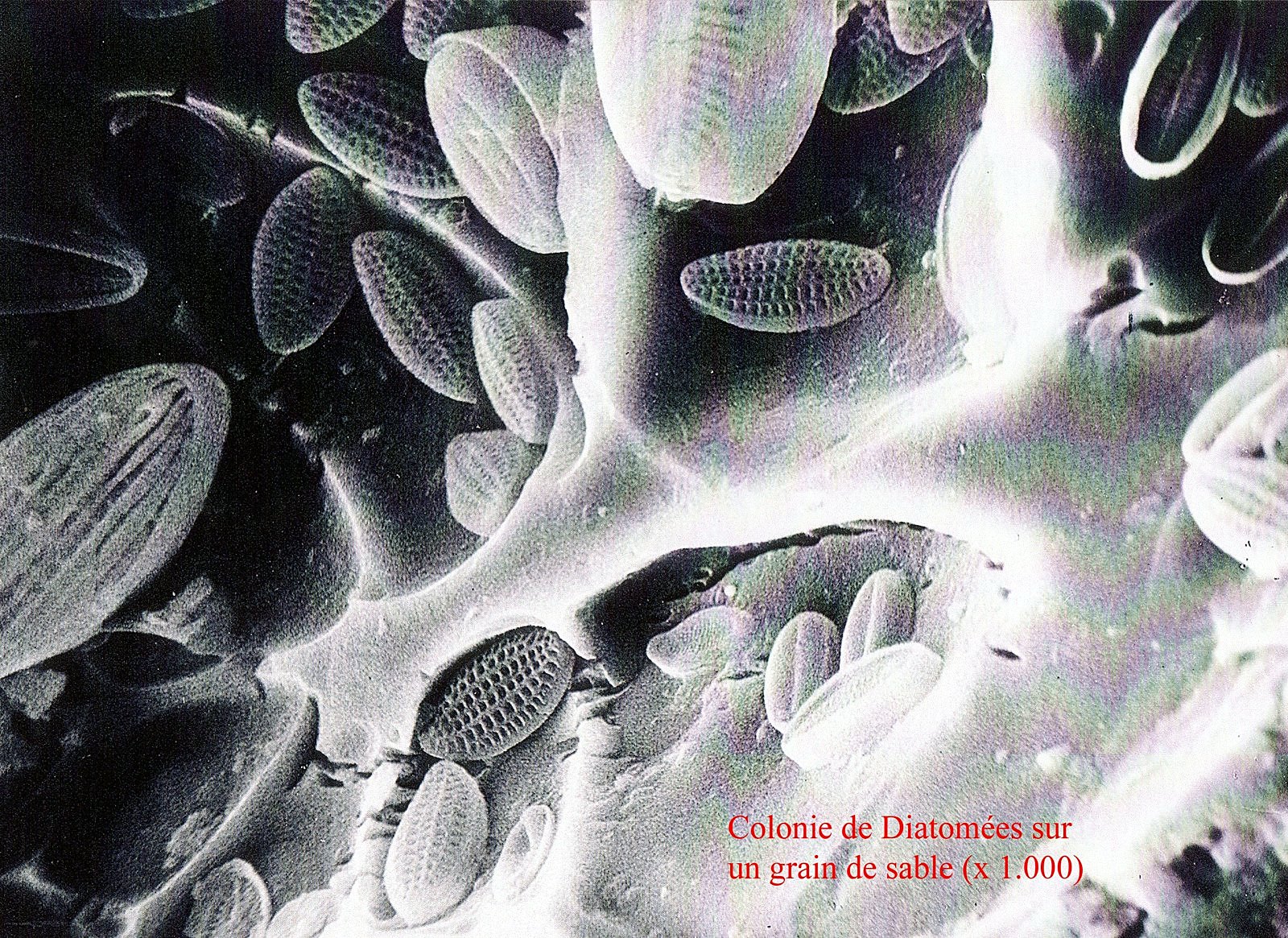
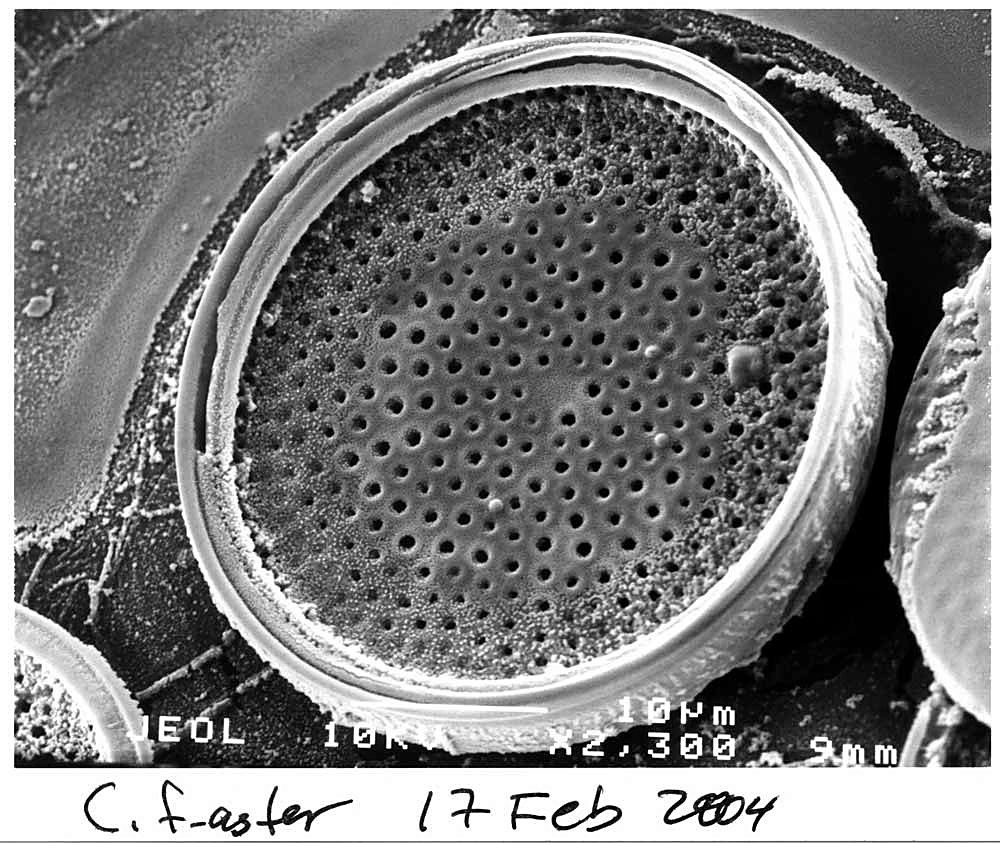
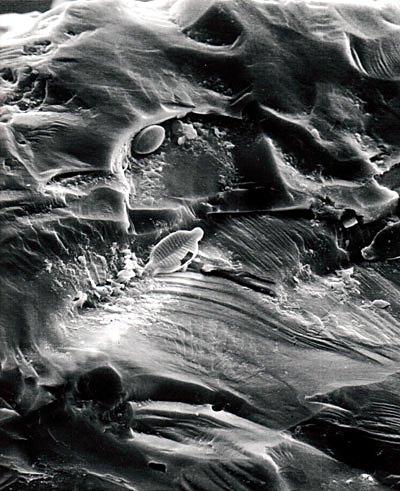
The following figures show the exploration of the surface of a grain of sand under the SEM. At 100 times (figure 1) the whole grain is visible: it is rounded, with a clean surface, several large circular depressions and two deep horizontal grooves on the right of the image. We shall explore the lower groove. At 1,000 times an oval appears, a diatom, a single-celled alga that forms part of the plankton (figure 2), enclosed in a silica shell called a frustule, finely ornamented and made of two interlocking parts. The grain on which the diatom rests is volcanic quartz, and its surface is partly covered by a film of glass that filled with air bubbles as it cooled, which explains the honeycombed floor of the groove. At 5,000 times (figure 3) the diatom is clearly visible, nestled at the bottom of one of the former air bubbles. At 10,000 times (figure 4) the smallest details appear, including the junction between the two valves of the frustule.
Solubility
The solubility of a substance is the quantity of it that dissolves in a given quantity of liquid.
When you put a lump of sugar into a cup of coffee, it dissolves quickly because the coffee is not saturated with sugar. If you add several lumps, only some will dissolve and the others will stay at the bottom of the cup, because the coffee has become supersaturated. After a while, some of the dissolved sugar will even settle out again as small globules.
This applies to everything immersed in or in contact with a liquid. The solubility of quartz in water is about 7 to 15 milligrams per liter, whereas that of amorphous silica is 115 to 140 milligrams per liter: amorphous silica is far more soluble than quartz and dissolves sooner.
The exoscopy of quartz
The principle of quartz exoscopy is simple: every natural environment leaves marks of a specific shape and size on quartz grains, produced by physical, chemical, mechanical and biological factors. When the grains change environment, those marks are reinterpreted according to the characteristics of the new setting.
Exoscopy rests on the identification and interpretation of 250 basic characters, which are like the letters of an alphabet. They make it possible to determine precisely where a grain of sand was deposited, to trace its geological history and, in some cases, its geographical origin.
On our journey we shall see only a few of the most spectacular characters. They will be enough to show that, just as with human beings, it is mathematically impossible to find two grains of sand identical in every respect. Each grain carries a multitude of specific information about its origin and about every stage of its existence.
The birth of quartz
At the beginning of our story, quartz is born. This crystal is made of anhydrous silica, that is, silica without water, and consists of one atom of silicon and two atoms of oxygen.
A crystal, whatever its nature, forms like a house, little by little. The molecules that compose it are the bricks that arrange themselves into the crystal structure. Table salt, sodium chloride, crystallises in the cubic system; quartz crystallises in the hexagonal system.
Take a quartz from a granite. When the magma, a viscous mass rising slowly from the depths of the earth, cools gradually, different crystals form, mainly micas, feldspars and quartz. The quartz, which crystallises last, has to find room between the other crystals, already well formed, and this affects its shape: it is shapeless, twisted, forced to mold itself between the crystals that formed earlier. These are called xenomorphic crystals.
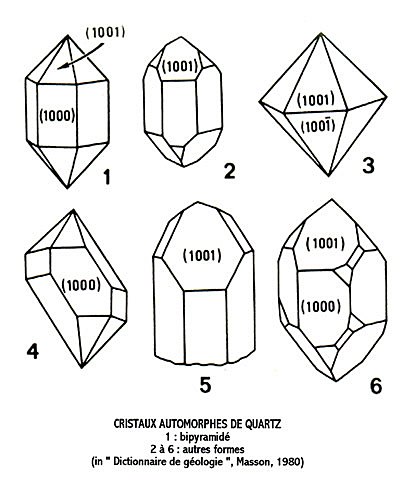
In a volcanic rock, by contrast, the lava rises quickly from the depths as a hot viscous mass and solidifies as it cools at the surface. This time the quartz has the chance to crystallise first: with no spatial constraints in the cooling magma, it can take magnificent crystalline forms, such as bipyramidal quartz. These are called automorphic crystals, because of their perfect geometrical appearance.
At this stage of their existence the new quartz crystals, automorphic or xenomorphic, are protected from outside attack within the rock that produced them, the parent rock. They still preserve all the characters acquired at birth: size, shape, inclusions and appearance.
But even for a quartz, all good things come to an end. As the parent rock reaches the surface, it is subjected to ever more aggressive weathering.
The weathering of the parent rock
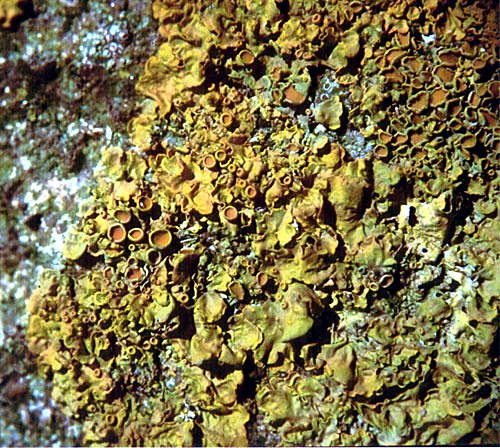
Little by little, rainwater, dew, frost and various aggressive agents such as the acids produced by lichens, plants and bacteria weather the parent rock ever more deeply. Water rich in aggressive agents circulates from the surface through the rock.
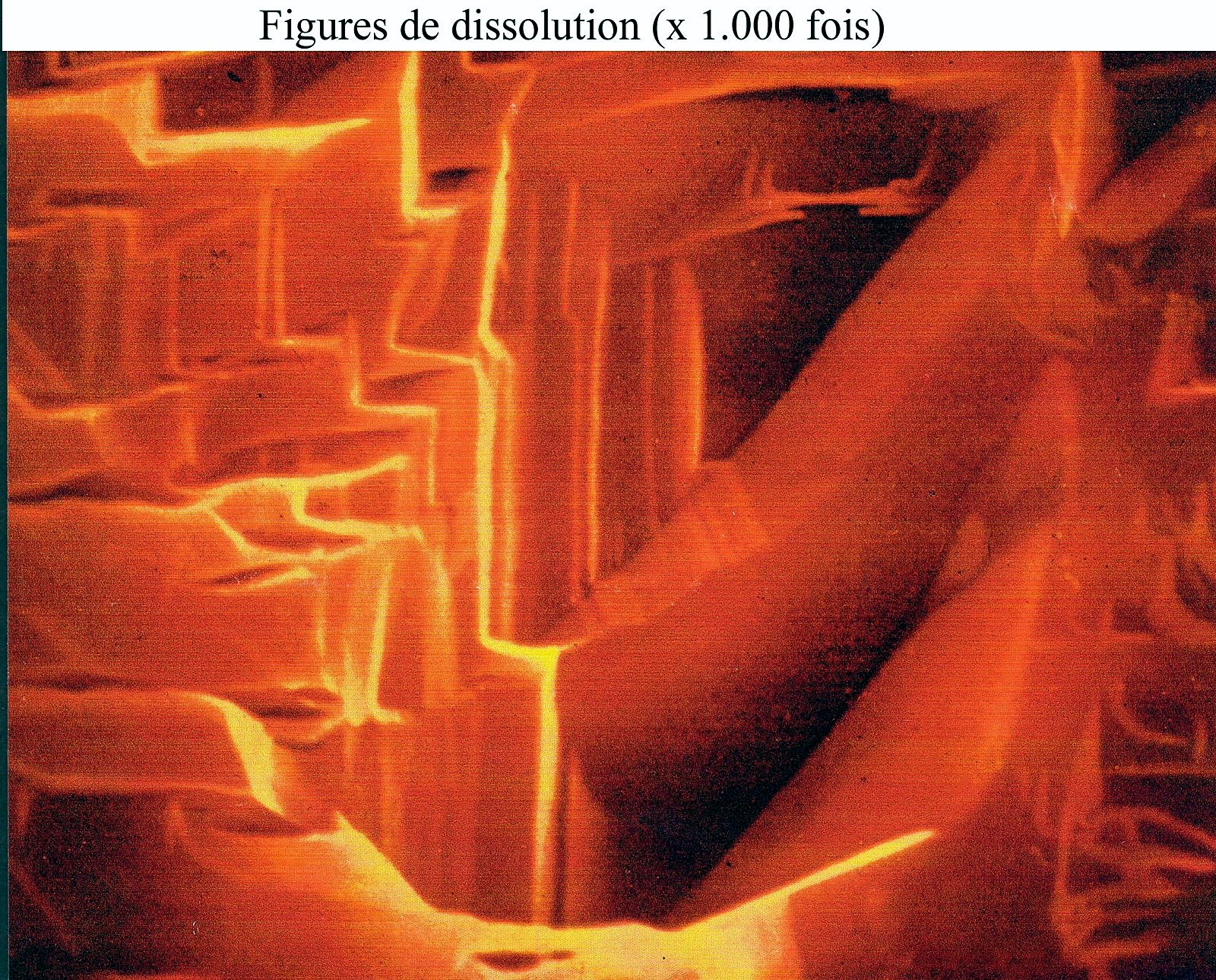
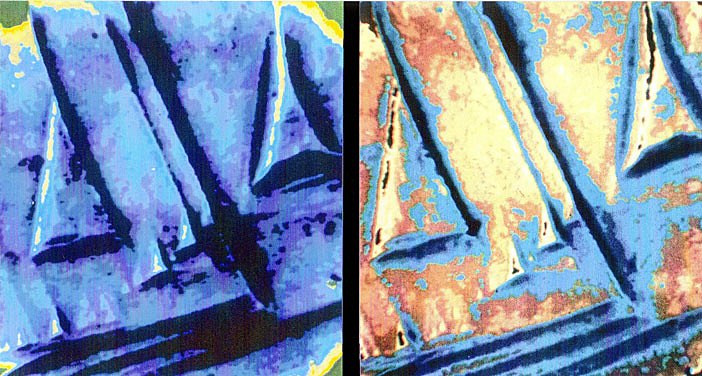
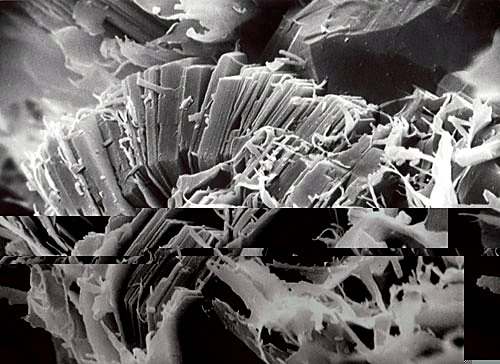
At first, the fluids circulating in the pores are strongly undersaturated in dissolved silica, and they corrode the quartz crystals. These chemical attacks leave lasting marks on the surface of the crystals: hollow triangles, witnesses to the perfect order of the crystal structure of quartz. These hollow triangles are in fact the remains of silica molecules dissolved by corrosion: they are dissolution figures.
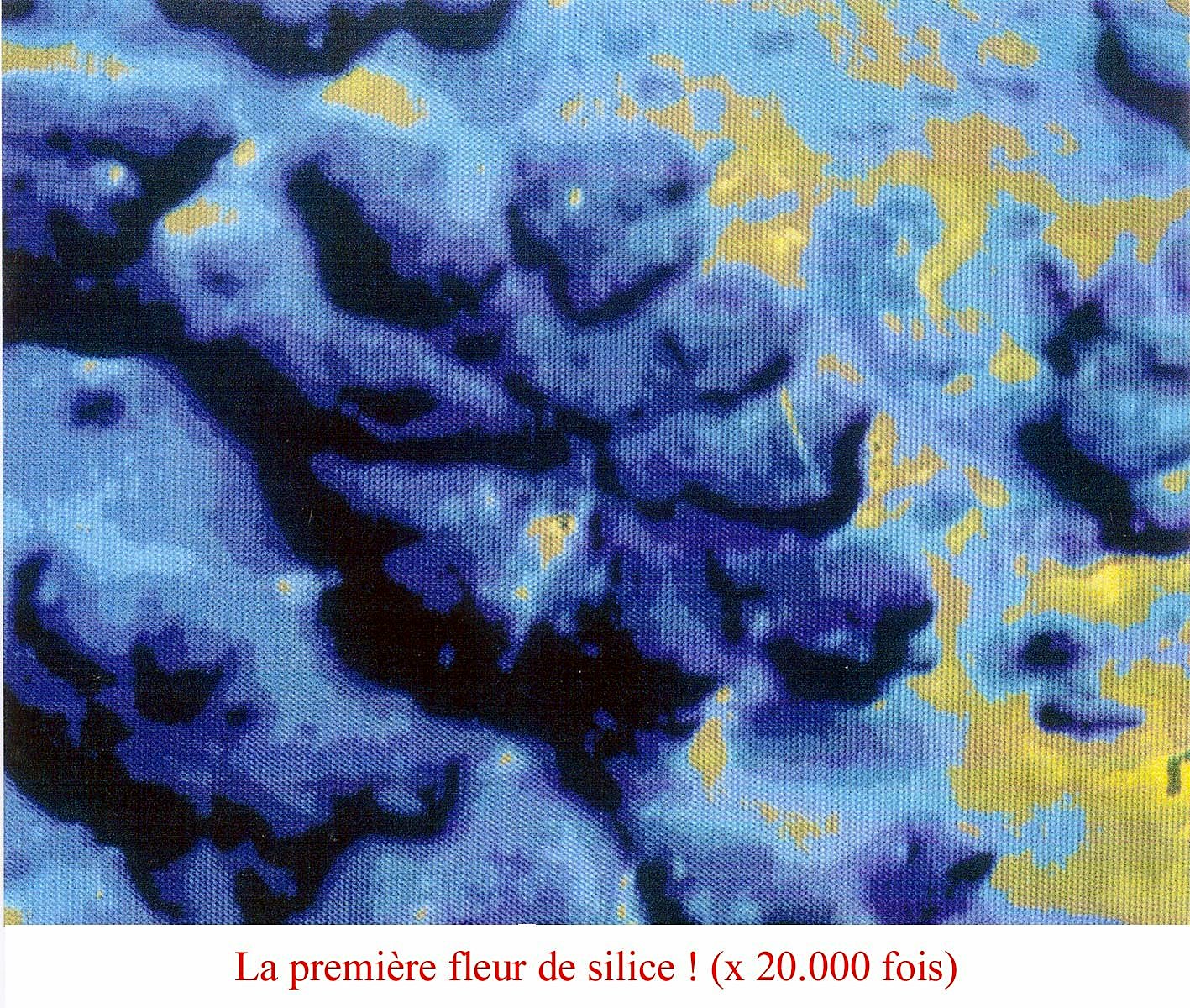
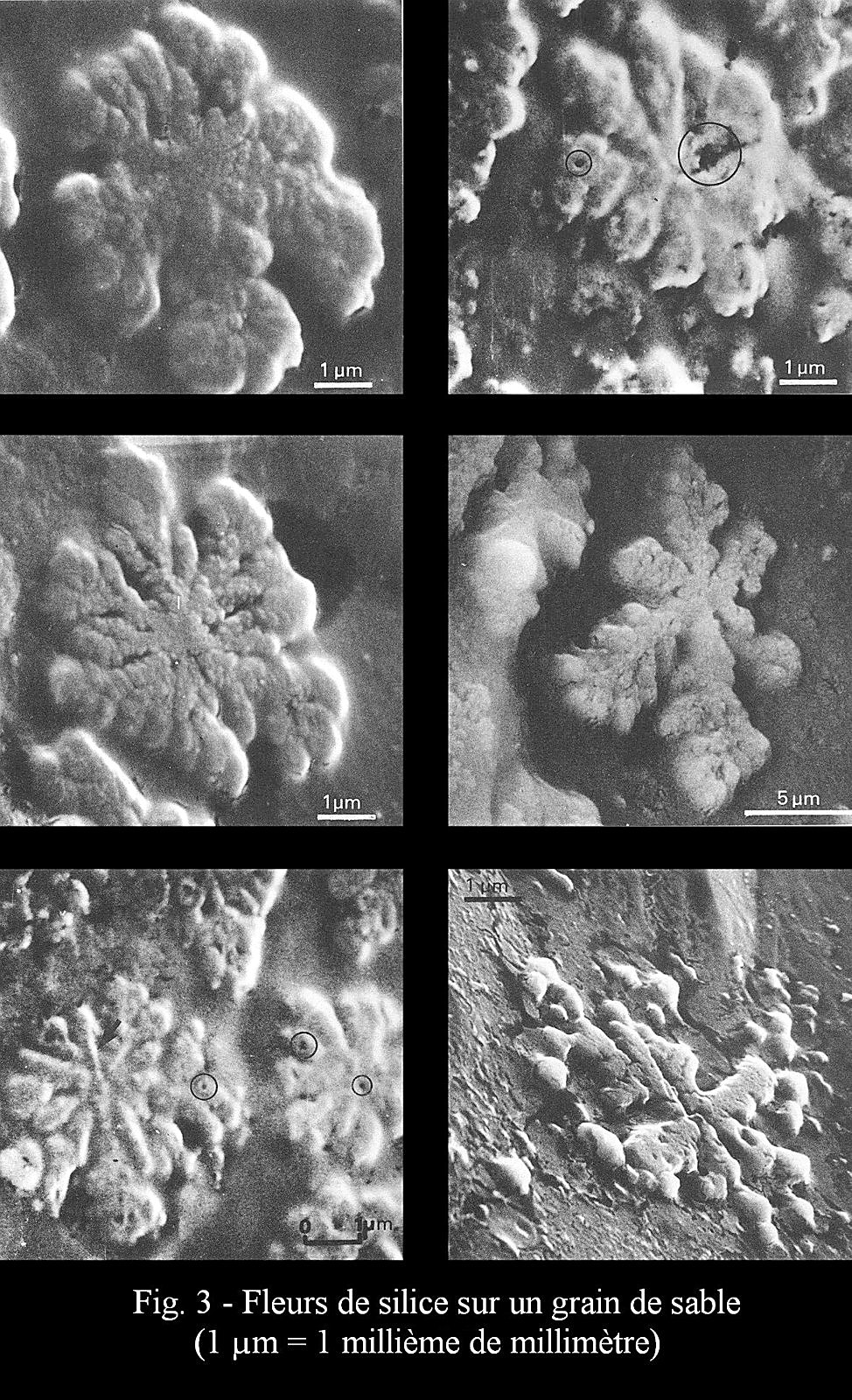
Then, as the corrosive liquids penetrate deeper into the rock, they take up the silica they dissolve in ever greater quantity, until they become saturated. They then release that silica as deposits of amorphous silica, in the form of globules, scaly films or superb silica flowers.
The first steps
Under chemical attack, the parent rock loses its cohesion and gradually disintegrates, releasing some of its minerals as grains of sand. This accumulation of grains is called a weathering grit. In the case of granite it is a mixture of feldspar, quartz and mica crystals. Rain, frost and dissolution remove the most fragile and soluble elements and leave only the resistant crystals, above all quartz.
The grit can be very thick and give rise to a more or less deep soil. At this stage the grains have not yet been transported and are completely immobile; their only movements are due to the soil fauna, such as earthworms and ants.
Then, with rainfall, the grit or the soil is washed away, freeing the quartz grains, which eventually reach a watercourse. There their true existence as grains of sand begins.
Ice
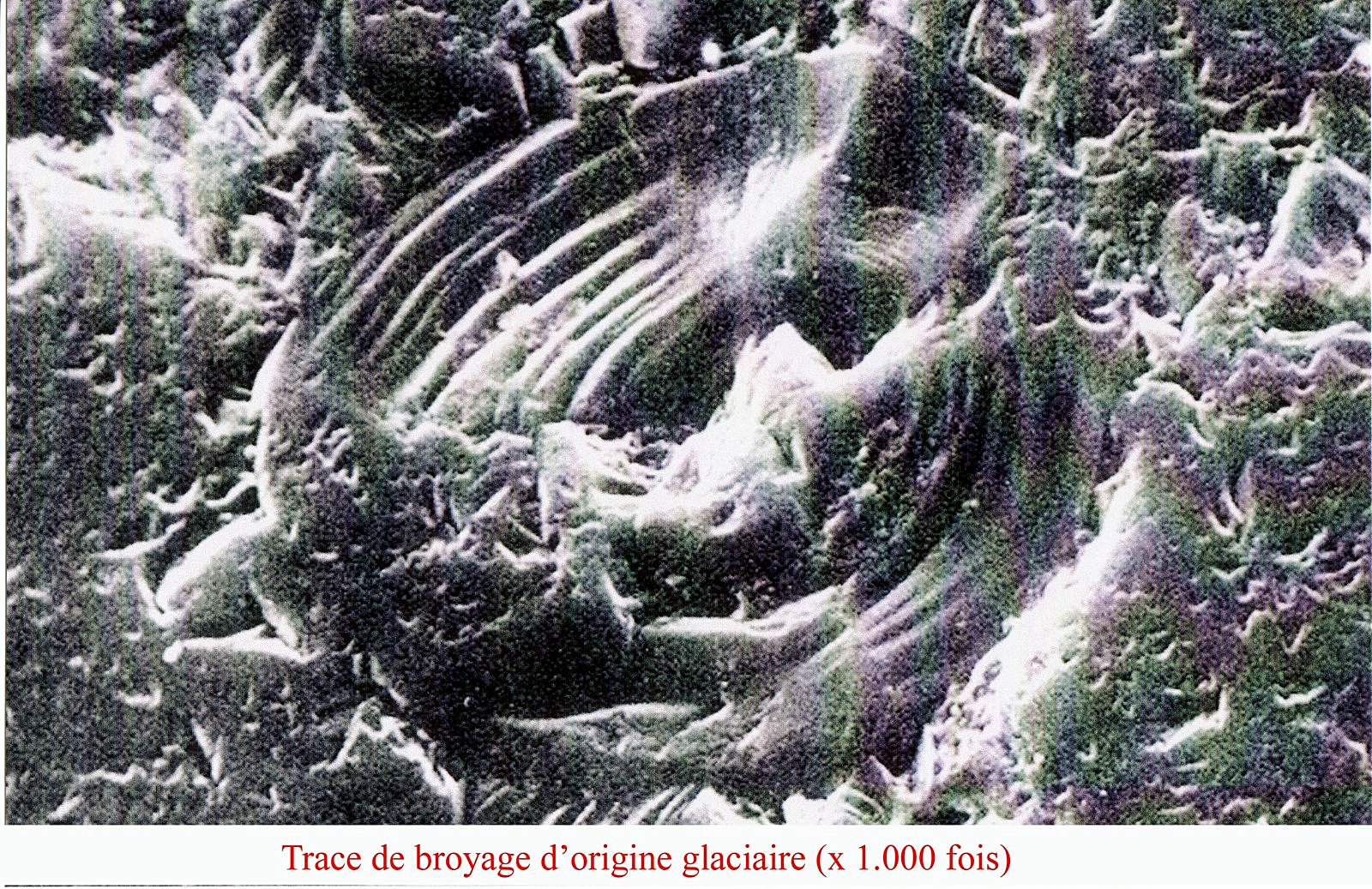
In cold regions the grains are often subjected to the action of glaciers. When they are strongly compressed against one another, crushing figures of a distinctive morphology form, revealing pressure exerted with a circular movement.
Rivers, ponds and lakes
Fresh water, whether from rivers, torrents, lakes or ponds, contains on average twenty milligrams of dissolved silica per liter. It is therefore undersaturated in amorphous silica (which it will dissolve) but not in quartz (which it cannot dissolve).
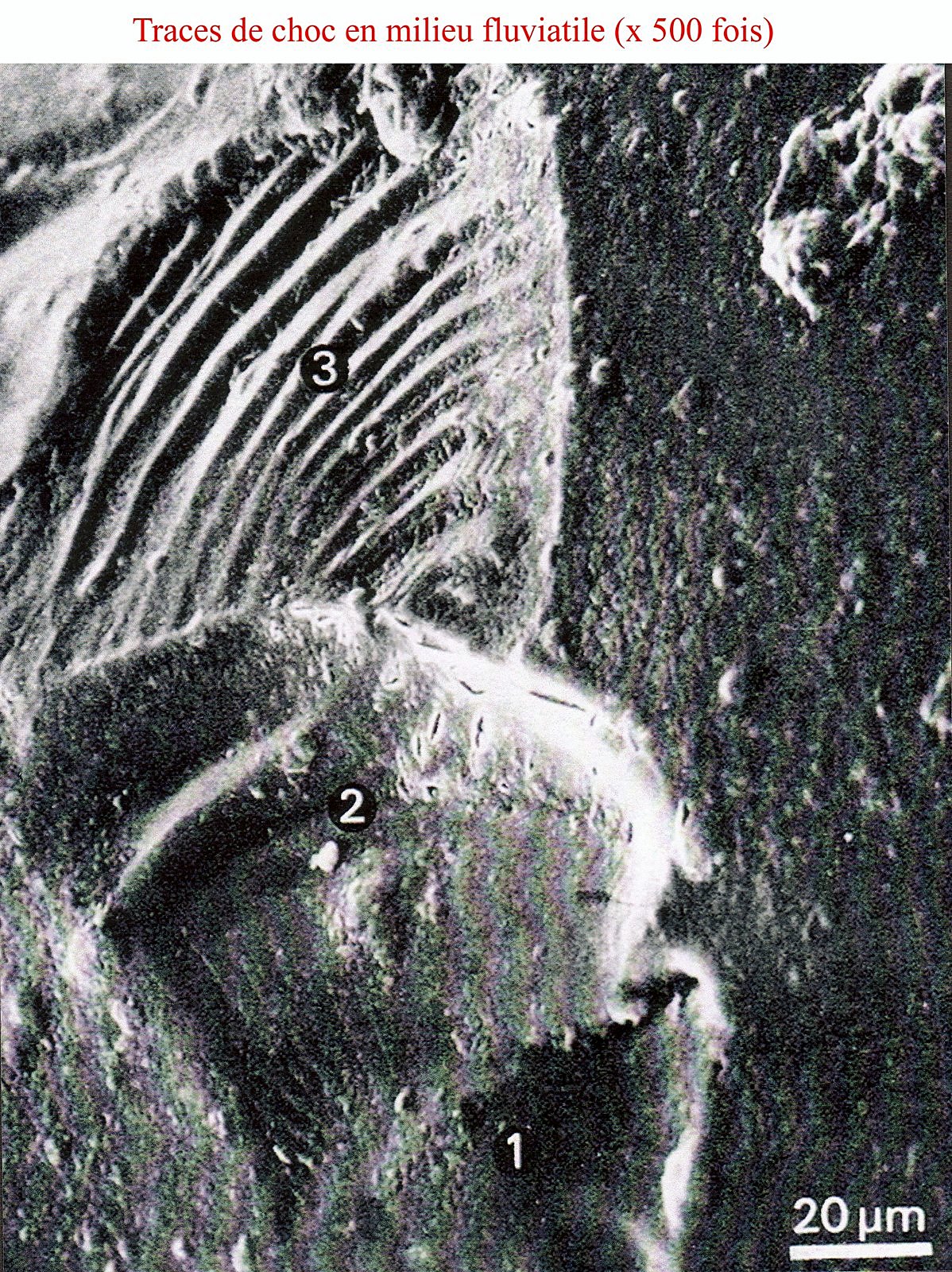
What damages quartz crystals most is transport, during which they rub against one another. The most exposed parts are naturally the edges of the grains, which are marked by impact and wear, from the angular outlines of the youngest to the blunted outlines of the oldest, with every possible variation in between. These marks are more visible and more numerous when the energy of transport is high.
The rubbing of grains against one another inevitably wears down their sharpest edges. In the corresponding figure, river diatoms are held in place by deposits of amorphous silica on the flat surfaces and in the hollows, their edges slightly polished and showing impact marks.
In lakes and ponds, very low-energy environments, the grains are not stirred; on the contrary, they may be coated with clay.
More or less quickly, depending on the energy of transport, our grain then heads for the sea and arrives on a beach.
Sea beaches
Seawater has a very low concentration of dissolved silica, under one milligram per liter on average, with a maximum of four. It is therefore undersaturated not only in amorphous silica but also in quartz. Even in the parts of the ocean richest in dissolved silica, saturation with respect to quartz is only ten per cent of that of amorphous silica.
Sea beaches are shaped by the tides, which form the intertidal zone. At high tide the sands are immersed in seawater that is very weakly saturated in dissolved silica and are stirred more or less vigorously by the waves. The edges of the grains receive impact marks with a polishing gradient, similar to those seen in rivers. But something else happens: seawater corrodes those impact marks and produces dissolution figures like those found in soils, but located specifically on the edges of the grains.
At low tide the grains are exposed to the air. Their surface, rarely smooth, has depressions in which tiny droplets of seawater stagnate. On a microscopic scale these droplets are real salt ponds in which diatoms and bacteria can live. As the water gradually evaporates, the quantity of dissolved silica stays the same, producing supersaturation: the silica precipitates as globular deposits that gradually enclose the micro-organisms living in the depressions.
Wind
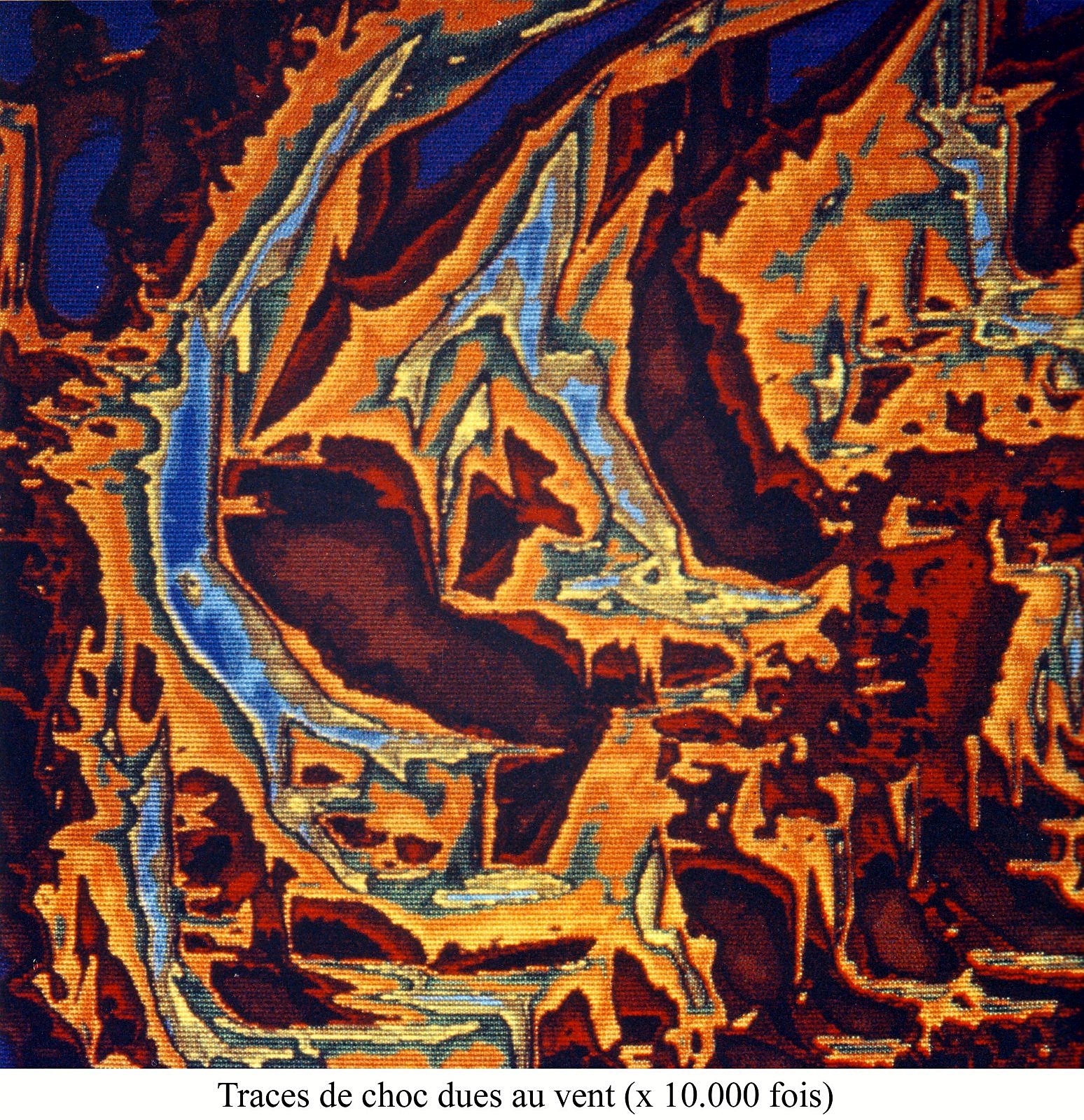
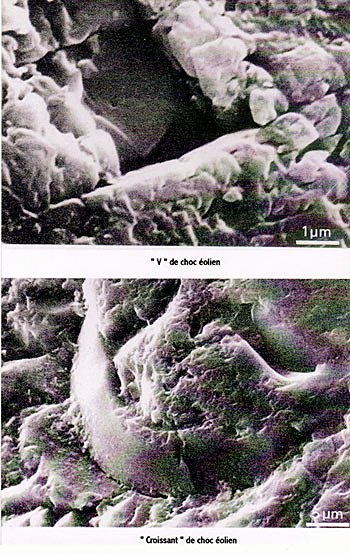
When the wind blows at low tide, the exposed grains are subjected to wind action. No longer protected by a film of water, they collide violently and acquire characteristic marks: depending on the force of the impact, impact V’s or impact crescents. Freshly formed, these marks have sharp angles; they will be polished only if the grains return to the sea and are stirred again.
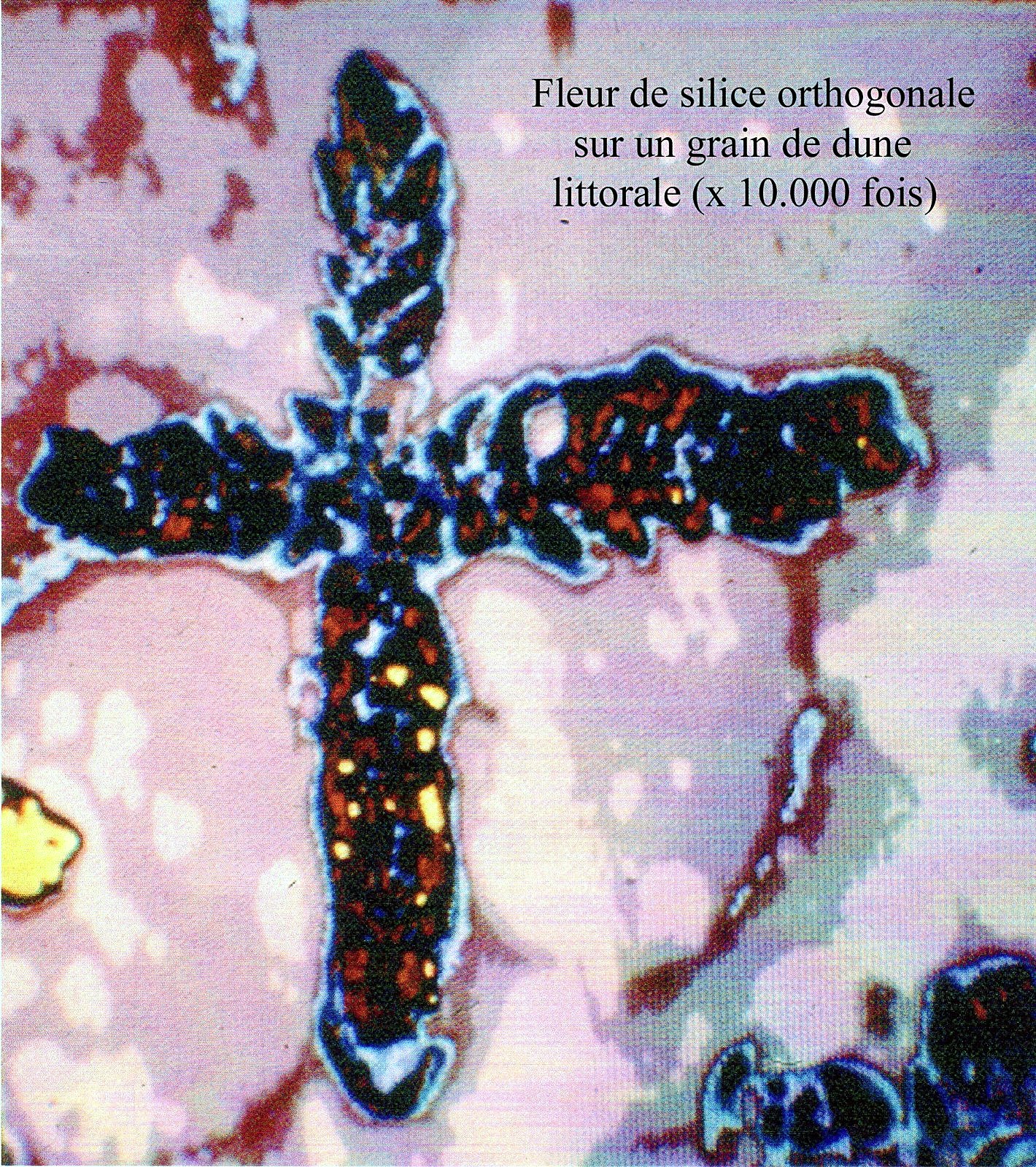
Otherwise the grains pushed inland pile up into coastal dunes overlooking the beaches. There, salt (sodium chloride) sometimes causes orthogonal silica flowers to form.
The underwater environment
The underwater environment, between the highest tides and the abyssal depths, remains permanently submerged. There the grains of sand are in constant contact with seawater that is deficient in amorphous silica and even in quartz.
The grains are gradually stripped of all the siliceous deposits that cover them and their surface becomes extremely clean. Then the quartz itself is attacked and new dissolution figures appear, hollowing out the old impact marks left by earlier sedimentary episodes. The corresponding figure shows wind impact crescents exploited by dissolution, on which the characteristic hollow triangular figures appear.
The sand at rest
Sometimes quartz grains pause on their journey, in particular when they settle in low-energy environments such as marshes.
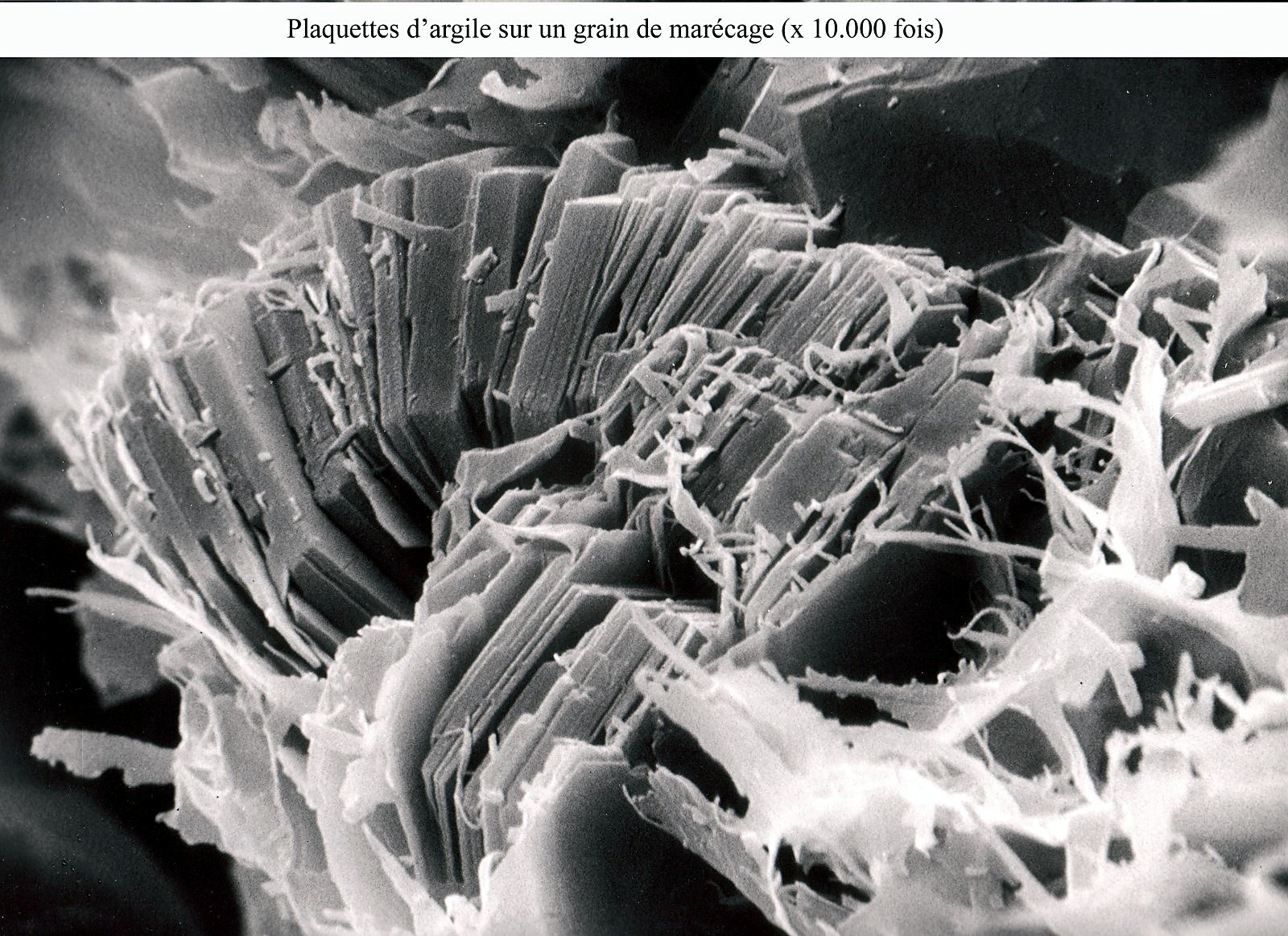
Very particular physico-chemical and organic conditions prevail there: varied microcrystals appear on the quartz grains, while clay particles stick to their surface.
When these pauses last, sometimes for millions of years, the grains may be completely regenerated. Fluids rich in dissolved silica circulate inside the immobilised layer of sand; when that silica precipitates, tiny quartz crystals form on the grains. Over time these microcrystals grow until they cover the whole surface and the grains become cemented to one another. This is how sandstones form, found at the surface, like the Fontainebleau sandstones, or at depth, like diagenetic sandstones, which can be oil reservoirs.
When these rocks are weathered by climatic change or erosion, the sandstone breaks down and releases entirely regenerated grains: the new crystal growth has masked the old scars.
These grains without memory, apparently untouched by any previous life, then set off again on new and eternal adventures.
Tautavel Man
The study of the sands of the Caune de l’Arago is a remarkable example of the use of exoscopy. The village of Tautavel is famed for its muscat wines, but it also shelters a cave, the Caune de l’Arago, first mentioned by the naturalist Marcel de Serres in 1838 and rediscovered in 1948 by Jean Abélanet, who observed remains of prehistoric industries there. Local enthusiasts dug there between 1948 and 1962, and from 1964 Henry de Lumley organized archaeological excavations every summer.
The first human skull was discovered on 22 July 1971: it belonged to a Homo erectus some 450,000 years old. Several other skulls and many bones were later brought to light. To determine the environment in which Tautavel Man lived, every scientific method was used, including exoscopy.
The sand grains of the Caune de l’Arago preserve traces of their initial weathering, followed by long transport by a watercourse and then exposure to the open air in an arid climate. The sands were later reworked by a river that finally abandoned them. The alluvium then underwent major soil-forming processes before being moved again by violent gusts of wind and deposited at the entrance of the cave, into which some elements were able to penetrate with run-off water.
Overall, the exoscopic study of the sands of the Caune de l’Arago makes it possible to trace the evolution of the environment in which Tautavel Man lived hundreds of thousands of years ago.
Gallery