“I therefore decide to draw up a whole series of procedures to be scrupulously followed so that the clues gathered in the field are collected in the best possible conditions, that is, without contamination.”
The samples Dr Le Ribault received and the files submitted to him only confirmed the disastrous state of French technical and scientific policing described to him by the D.S.T. The interregional forensic laboratories were ineffective and outdated. Even the best specialists can do excellent work only if the samples they examine are of good quality, and most of the exhibits reaching Le Ribault were a problem because they had been taken without rigor and sometimes proved unusable. The reason was simple: investigators, whether police or gendarmes, were not trained in the extremely meticulous sampling techniques required for examining sealed exhibits under the electron microscope.
To improve the collection of clues in the field, Le Ribault decided to establish a series of procedures to be followed scrupulously in order to avoid contamination.
In December 1985 he published a detailed document explaining, with concrete examples, what microanalysis is, how to collect clues and what precautions to take so as not to contaminate crime scenes.
The three basic principles of microanalysis
- No two objects or two individuals are identical.
- Every object or individual carries the traces of the events it has lived through and the places it has been.
- Two objects or individuals in contact exchange information. This third principle had already been stated by Locard, but had never been exploited since his death.
Freezing the scene
It is essential to keep anyone who is not a specialist, whatever their rank, away from the crime scene until the experts arrive.
Not contaminating the crime scene
The third point concerns the non-contamination of the scene by the experts themselves. Since every individual alters his surroundings, Le Ribault advised experts to wear a full lint-free plastic suit, a surgical cap and gloves, and plastic overshoes, so as not to contaminate the scene.
A meticulous methodology
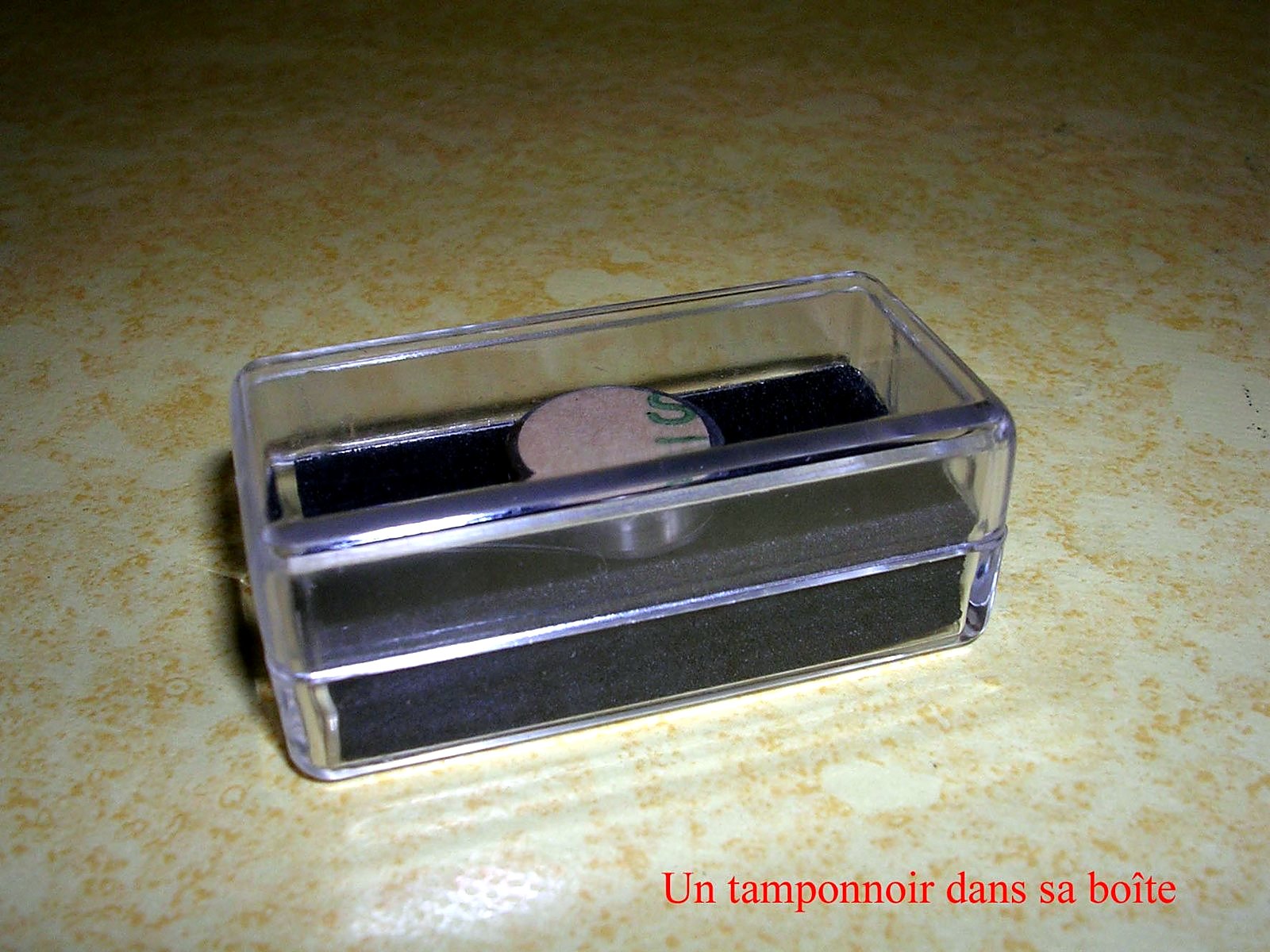
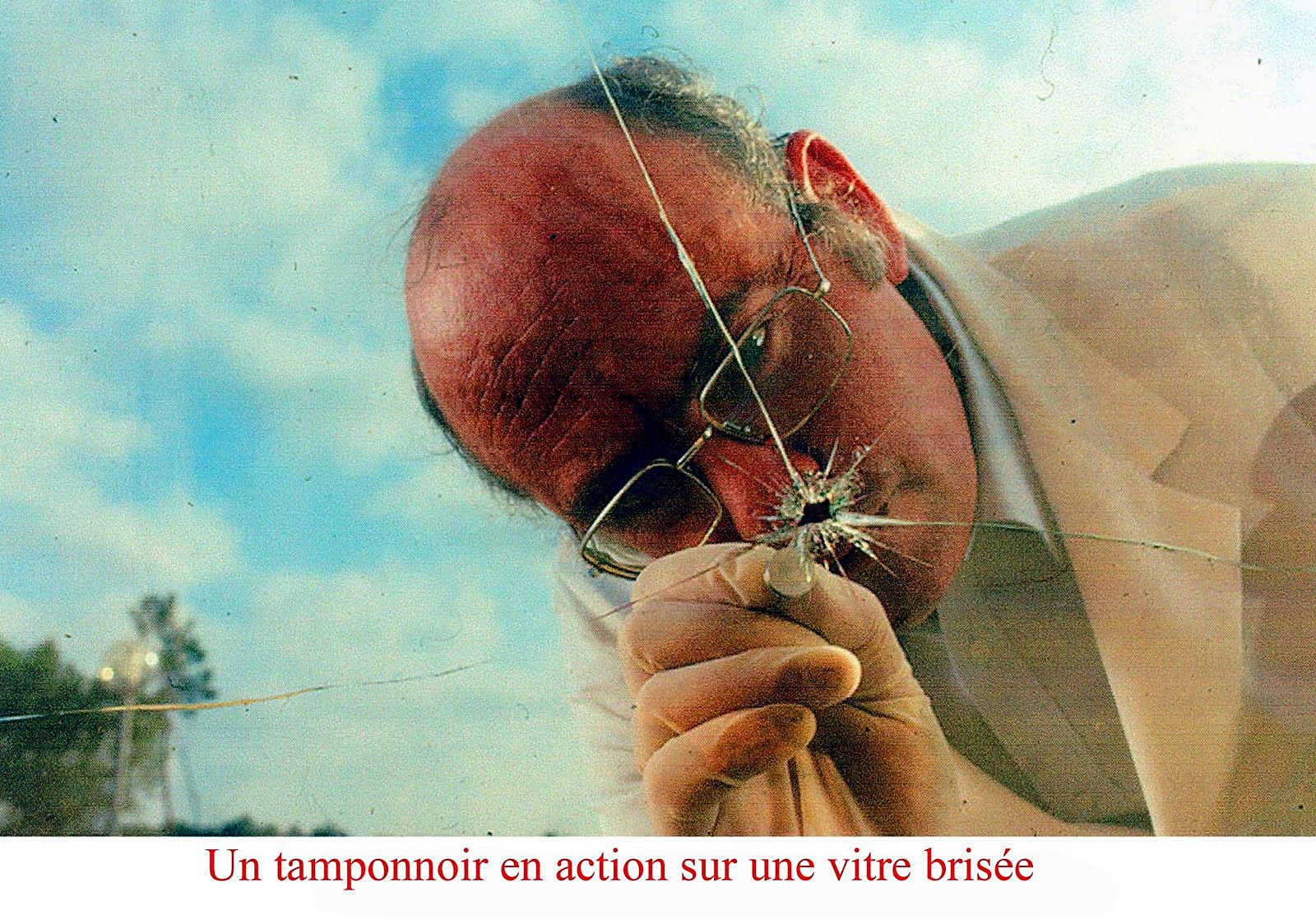
The tamponnoir
At the heart of this revolution is the tamponnoir, an innovative implement for collecting with precision the surface particles present on any object or body. Thanks to its aluminum stub fitted with double-sided adhesive, it prevents any contamination between sampling and study in the laboratory. An invention so novel that it was patented. In his document Le Ribault recommended systematic sampling in the field, at the autopsy and from suspects, pending the clarification of the case: taking the victim’s hair, scraping the nails, swabbing the hands and seizing the clothing. Valuable clues that could make the difference in solving a case.
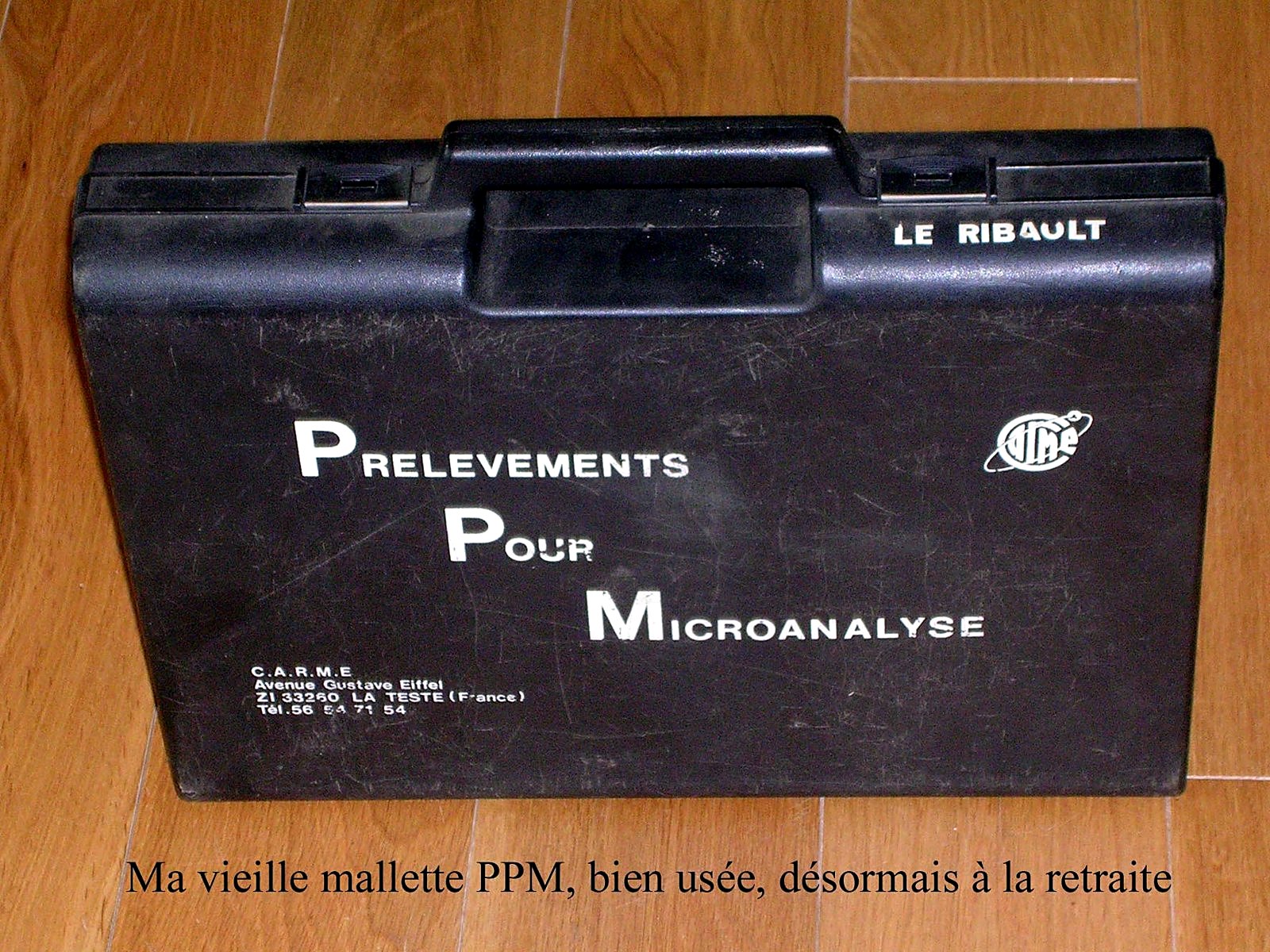
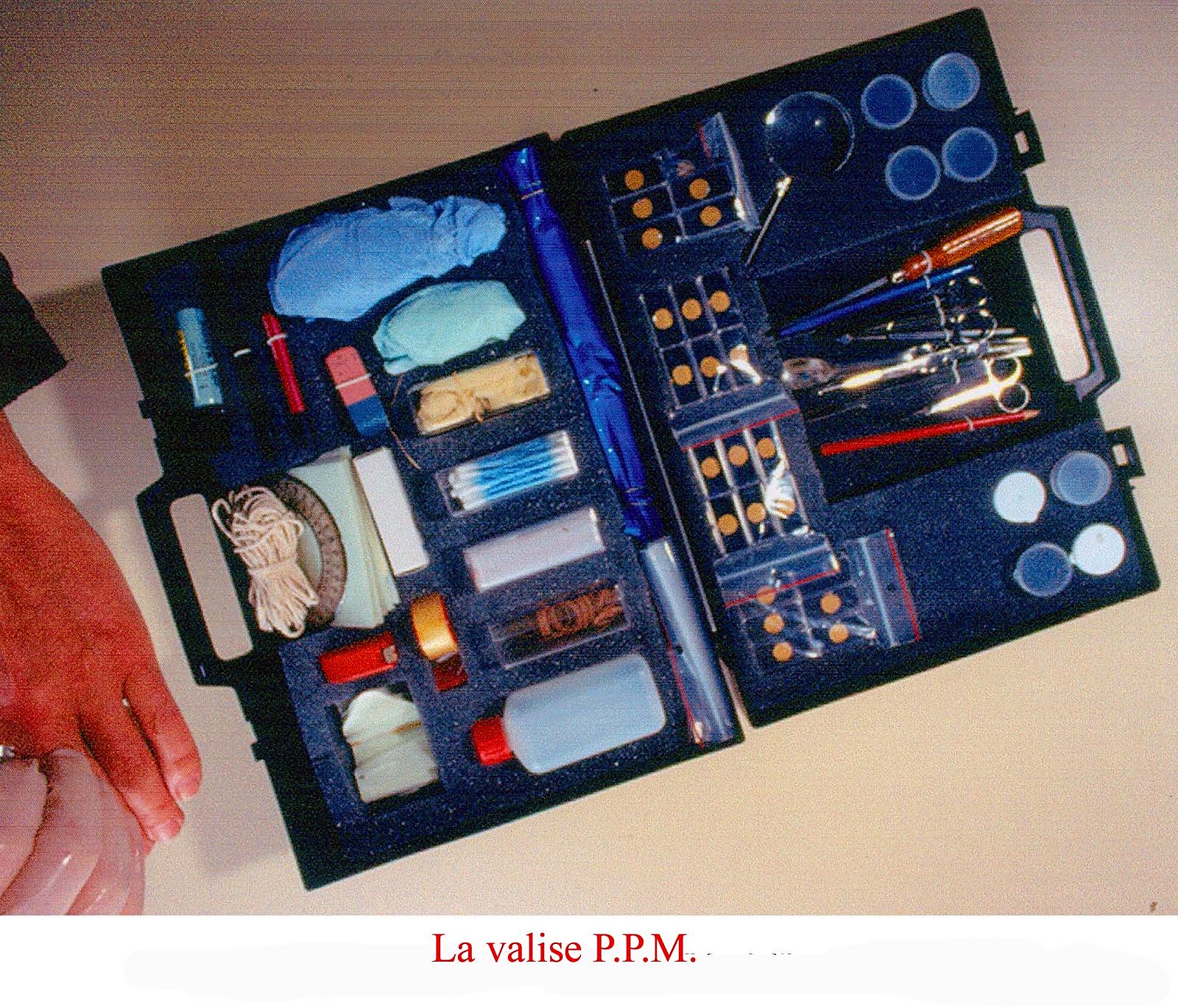
The Sampling For Microanalysis kit
To make field sampling easier and more effective, Dr Le Ribault created and distributed a sampling kit he named the P.P.M. case (Prélèvements Pour Microanalyse). A meticulously designed case containing all the accessories and instruments needed for efficient sampling. With it, investigators could go into the field certain of having every tool required for their task.
The intervention vehicle
Finally, Le Ribault designed the intervention vehicle. Equipped with state-of-the-art analytical equipment and operated by qualified technicians, it was a genuine innovation in the solving of criminal cases. Hailed as a feat at the Milipol show in November 1987, it made it possible to carry out analyses in real time and to process on the spot the clues gathered: a major advance that considerably reduced waiting and analysis times and allowed cases to be solved more quickly.
Gallery